The Online Support and Intervention program will offer guided online cognitive-behavioral therapy for children aged 5 to 12 in Asia and Latin America.
A new digital tool developed in the UK to treat childhood anxiety is preparing to reach thousands of families across continents. The platform Online Support and Intervention (OSI), Developed by Oxford researchers, it is a therapist-guided, parent-led online cognitive-behavioral therapy program designed for children aged 5 to 12.
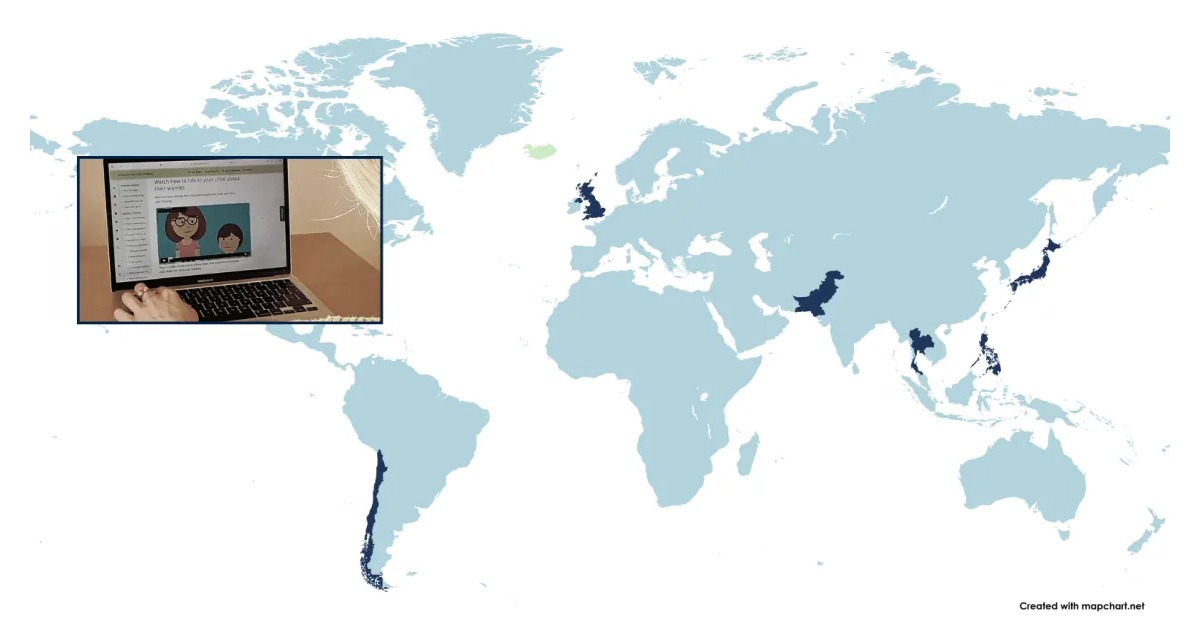
The project, funded with £7 million by the Wellcome Foundation, will bring together researchers, clinicians, and child mental health experts from seven countries to adapt, evaluate and apply the tool in Japan, Chile, Pakistan, the Philippines, and Thailand, in addition to the United Kingdom and Iceland. The goal is to reach 1,600 children and create the necessary conditions for its sustainable implementation on a large scale, especially in places where child mental health services are limited.
Developed by Professor Cathy Creswell, holder of the Paul Foundation Chair of Clinical Developmental Psychology at Oxford, OSI has proven to be clinically effective and cost-effective in trials conducted in the United Kingdom. The program combines brief sessions with therapists and guided activities for parents, reducing professional care time by up to 40% without diminishing the effectiveness of the treatment.
The tool was recommended by the National Institute for Health and Care Excellence (NICE) following an early value assessment and is now routinely used in more than 20 areas of the National Health Service (NHS). Over 1,000 British families have already benefited from the program, which aims to empower parents to directly support their children in managing anxiety.
The new international project encompasses several phases, from the cultural and linguistic adaptation of the platform to evaluating its effectiveness in different contexts and developing strategies for its sustained expansion. The collaboration will also prioritize the participation of people with lived experience and the strengthening of local capacities in research and digital mental health.
Proven impact of the OSI program in the United Kingdom:
- 444 families participated in the initial clinical trial across 34 health services
- 40% reduction in clinical time without loss of efficacy
- More than 1,000 families have benefited since its national implementation
- 20+ NHS areas already use OSI as standard practice
Meanwhile, in Chile, the project will be led by Dr. Miguel Cordero Vega of Universidad del Desarrollo, who highlighted that the country has a relatively robust healthcare system, but with limited access to child mental health services. “We hope that, in five years, OSI will contribute to improving access to evidence-based digital treatments and that we can share the lessons learned throughout Latin America,” he stated.
For his part, Dr. John Jamir Benzon Aruta, from De La Salle University in the Philippines, emphasized that the tool offers a practical solution to the shortage of specialists and geographical distance. “We need solutions that reach families, not the other way around,” he stated.
The project will also have the support of The Global Health Network, The initiative, from the University of Oxford, will promote collaboration between the teams and ensure equity in implementation. Its director, Trudy Lang, highlighted that the initiative represents “an example of how a clinical innovation can be adapted to benefit young people in different settings around the world.”.
The business partners include Koa Health, the company responsible for implementing OSI in the UK, and BitJam Ltd, which will participate in the international technological adaptation. Koa Health will contribute its expertise in the regulation, scaling, and sustainability of digital mental health solutions.
For Tayla McCloud, digital mental health research leader at Wellcome, this initiative reflects the power of digital interventions to democratize access to children's mental health care. “Many mental health conditions begin in childhood, which is why early intervention is essential. OSI offers a scalable, evidence-based solution that empowers families and prevents anxiety from limiting young people's futures,” she said.