An innovative approach presented by researchers at Mass General Brigham could be key to providing personalized treatment for Parkinson's disease.
Researchers at Mass General Brigham have developed a algorithm deep brain stimulation or deep brain stimulation (DBS) that promises to personalize the treatment of Parkinson's disease (PD). This advance could optimize the treatment of specific symptoms and significantly improve patients' quality of life.
DBS has proven effective for some Parkinson's symptoms, but not all symptoms improve equally. To address this variability, researchers at Mass General Brigham studied Parkinson's patients treated with DBS at five different centers. They identified brain connections associated with four major Parkinson's symptoms: tremor, bradykinesia, rigidity, and axial symptoms (gait and posture problems). One study was published in Nature Communications.
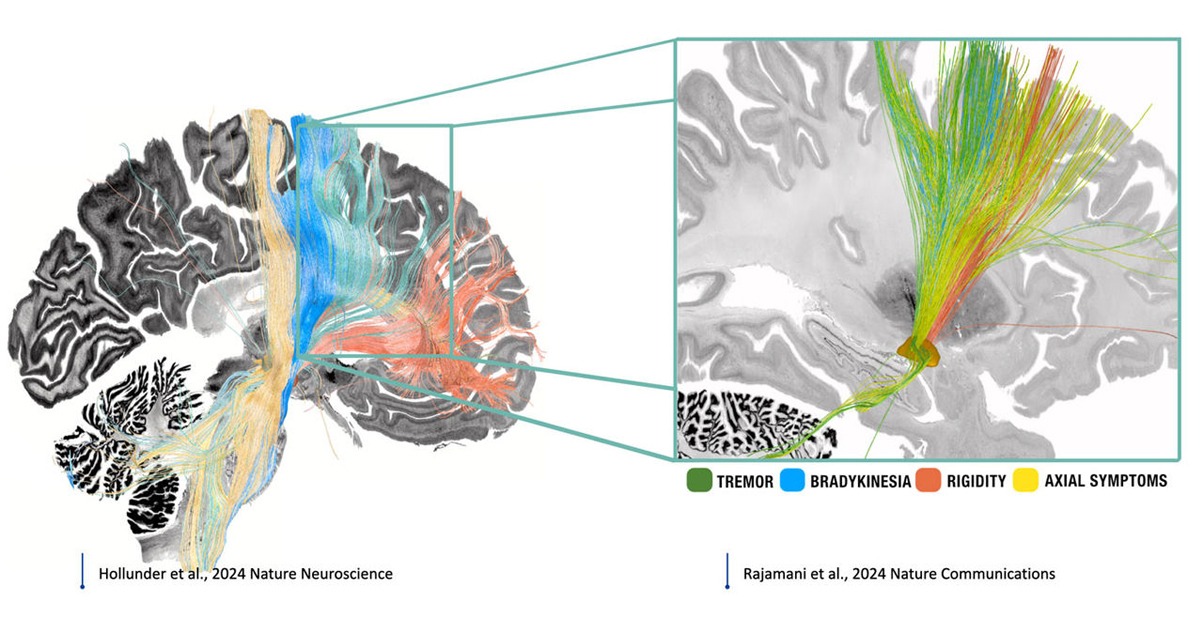
Subsequently, using software developed by the team, the researchers mapped the brain regions associated with the improvement of these symptoms. The findings were as follows:
- The tremor improves with stimulation of tracts connected to the primary motor cortex and the cerebellum.
- Bradykinesia is associated with the supplementary motor cortex.
- Rigidity improves with stimulation of the premotor cortex.
- Axial symptoms, which do not respond well to DBS or dopaminergic therapies, improve with stimulation of tracts connected to the supplementary motor cortex and brainstem.
Based on these findings, the researchers created Cleartune, a algorithm which suggests optimal stimulation parameters for DBS. Cleartune was preliminarily tested on five patients in Germany, showing significant improvements in Parkinson's symptoms in four of them, exceeding the protocols standard of treatment.
The development of algorithm Cleartune represents a significant advance in personalized Parkinson's treatment using DBS. This approach not only improves specific symptoms but can also establish a framework for enhancing DBS treatments for other neurological diseases. Continued research and interdisciplinary collaboration are essential, according to the authors, to refine this method and expand its clinical application.